The Overlooked Connection Shaping Your Heart Health
With nearly 1 in 3 adults in Europe living with high blood pressure1 and high cholesterol causing an estimated 3.6 million deaths globally each year,2 the significance of these indicators as a public health topic is clear. While often discussed as separate issues, these two factors must be looked at in connection to establish a complete and effective heart health strategy. This article uncovers this hidden link, explores how it impacts heart health in men and women differently, and outlines actionable steps for every patient managing cardiovascular wellbeing.
How Cholesterol and Blood Pressure Work Together in Heart Health
Cholesterol is a substance essential for building healthy cells. It is transported through the bloodstream by lipoproteins, which are categorized by their density. High-density lipoprotein (HDL) is often known as the “good” cholesterol as it helps remove excess cholesterol from the body, while low-density lipoprotein (LDL) is known as “bad” cholesterol.2 High levels of LDL cholesterol are a significant concern, with an estimated 24% of all cardiovascular-related deaths attributed.2 Read more about LDL cholesterol here.
Elevated levels of LDL cholesterol can lead to build up of plaque in arteries, a condition known as atherosclerosis.3 This plaque build-up narrows arteries, requiring the heart to pump with more force, which in turn leads to high blood pressure.3
Blood pressure is the measure of the force exerted by circulating blood on the walls of the arteries. When this pressure is persistently high, a condition known as hypertension, it places continuous stress on the delicate inner lining of these vessels.3 This sustained force can cause micro-tears and inflammation, creating rough patches on the otherwise smooth arterial surface. These rough patches allow circulating LDL cholesterol to more easily penetrate the artery wall and become trapped, initiating or accelerating the process of plaque formation.3
In the end, high blood pressure doesn’t just result from narrowed arteries, it actively helps create the conditions for new blockages to form, ultimately worsening the cycle of atherosclerosis and creating a loop. Clinical studies underscore this connection, with about two-thirds of individuals with high blood pressure also having high cholesterol.4
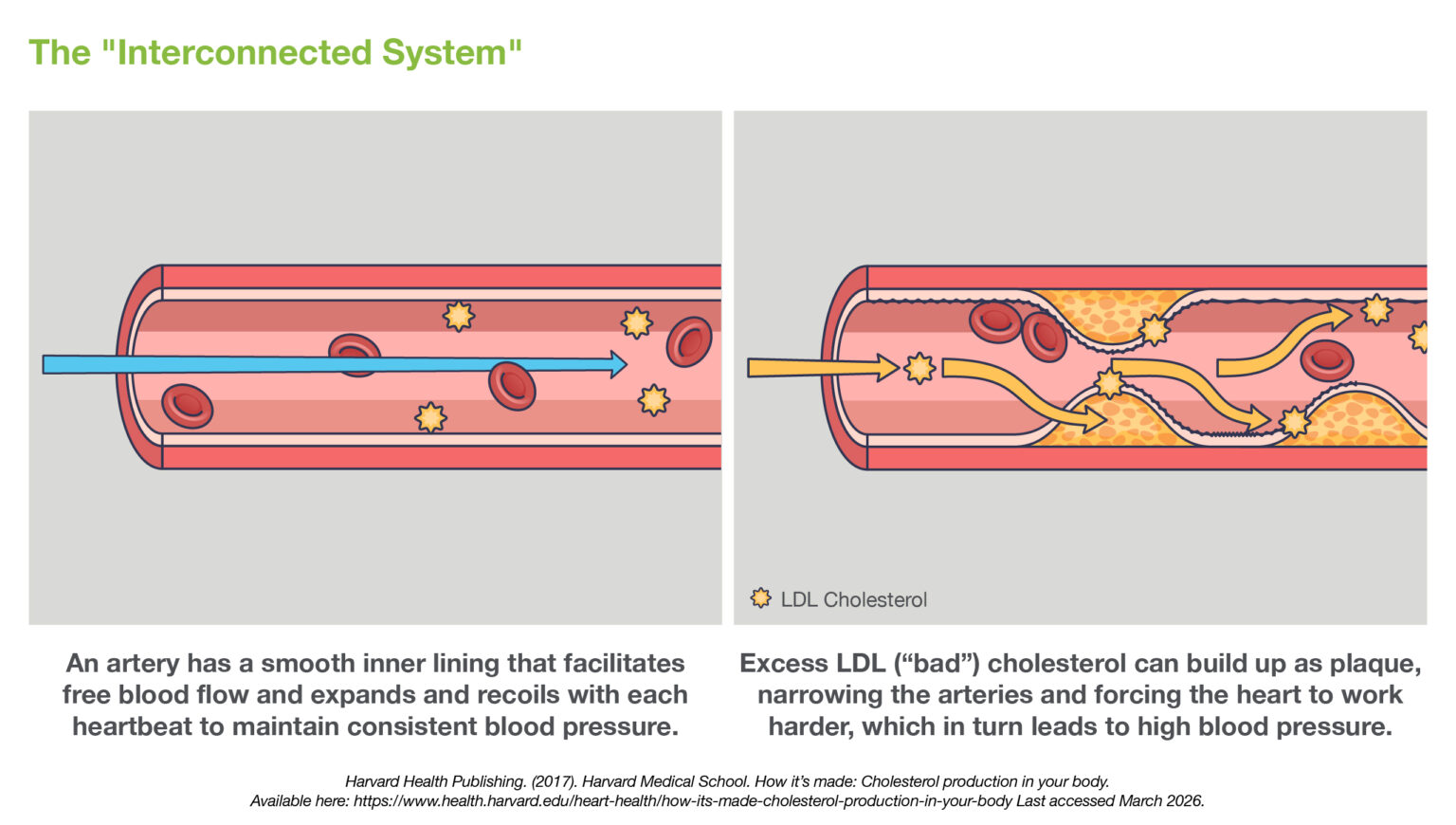
When both high blood pressure and high cholesterol are present, the risk of cardiovascular disease, like heart attack or stroke, is significantly higher.5 High blood pressure places constant strain on the arteries, while high cholesterol leads to the development of plaque. Together, they create a scenario where plaque is more likely to rupture, forming a clot that can block blood flow to the heart or brain.5 As such, managing one factor directly impacts the other and is essential to understanding and reducing risk.
Gender differences in heart health
A critical aspect of further understanding this risk involves recognising that the nature of disease – for instance the presentation of atherosclerosis can be different based on gender.6 Simplified one can say, that in men, plaque often builds up in distinct, larger blockages within the main arteries. In women, it is more common to see plaque spread more evenly throughout the smaller arteries. It can be difficult to detect as standard diagnostic tools, angiograms for instance, might not be able to identify this.6
An important reason for the differences between genders is the hormonal influence, as a woman’s risk profile for heart disease often changes significantly after menopause.7 In fact, research indicates that in the years around their final menstrual period, a woman’s LDL cholesterol can increase by up to 15%.8
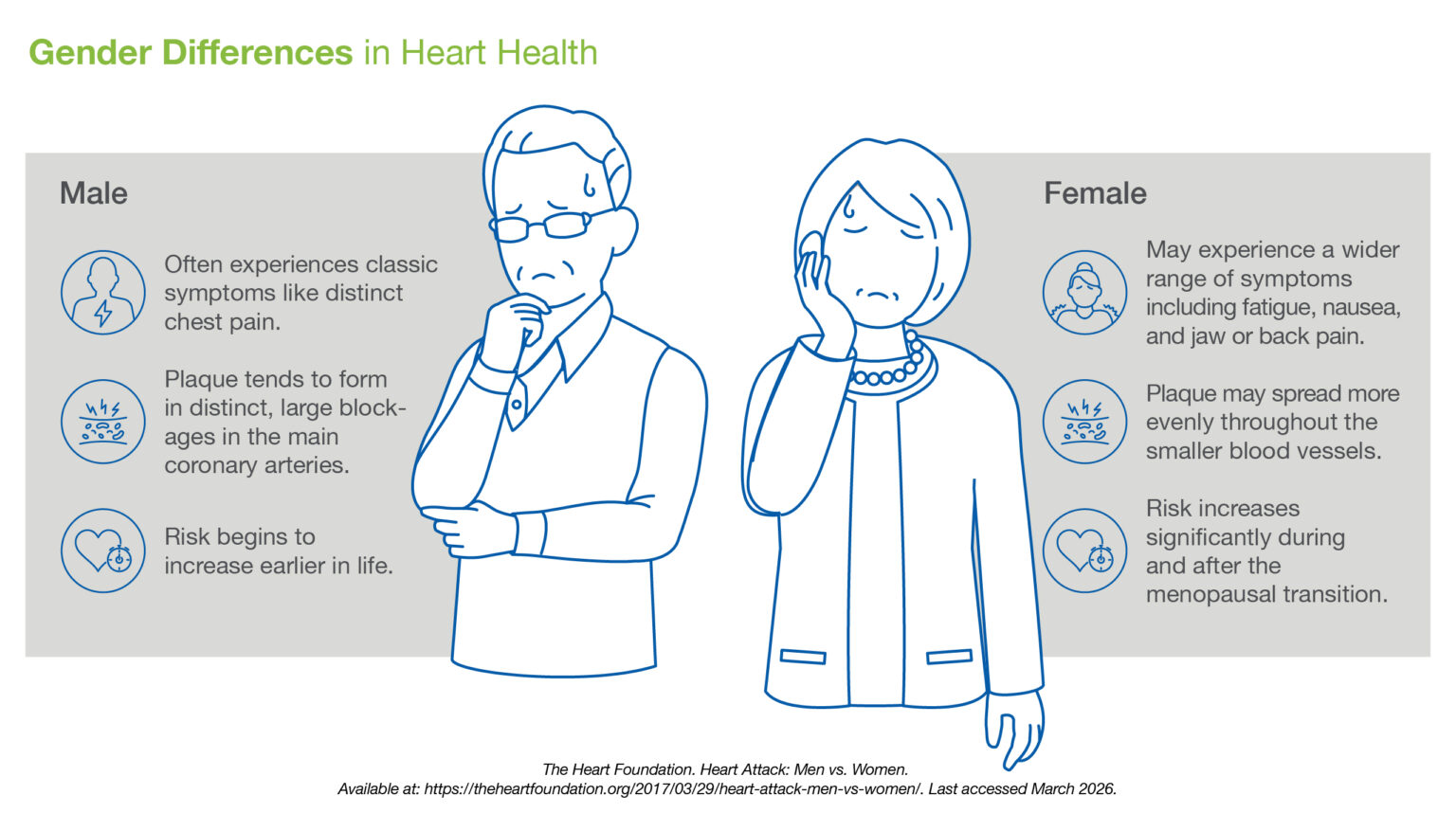
Additionally, symptoms present themselves different between men and women. For instance, with heart attacks, men often experience classic heart attack symptoms like distinct chest pain, while women may present with symptoms such as persistent fatigue, shortness of breath during simple activities, or discomfort in the jaw, neck, or back.9 Furthermore, certain co-existing conditions like diabetes have been shown to increase the risk of heart disease more significantly in women than in men.2
Building a Proactive Heart Health Strategy for Everyone
To reduce risk, it is important to have a proactive strategy for heart health in place. For instance, regular medical screenings to monitor blood pressure and cholesterol levels are foundational for an aging population. Alongside this, lifestyle modifications are also needed for long-term heart health, such as:
- Nutrition: following established diets like the DASH (dietary approach to stop hypertension) diet is highly effective.10 This involves a diet full of fruits, vegetables, and whole grains while limiting sodium and saturated fats. You can read more on healthy heart diets here.
- Physical activity: the standard recommendation for adults is at least 150 minutes of moderate-intensity activity per week.11 Activities like brisk walking can significantly improve heart health and have been shown to raise beneficial HDL cholesterol levels.2 Read more about how to structure your exercise routine for heart health.
- Alcohol moderation and smoking cessation: Lifestyle choices can play a direct role. For instance, smoking damages the lining of the arteries and negatively affects cholesterol levels and blood pressure.2 Similarly, excessive alcohol consumption can lead to high blood pressure and other heart problems.
- Stress management: Chronic stress can have a direct physiological impact on the heart. Developing strategies to manage stress, such as mindfulness or regular exercise is a crucial component of cardiovascular wellbeing.2 Read more about ways to reduce stress here.
A proactive approach to heart health
Ultimately, it is important to understand that a one-size-fits-all model for heart health is insufficient and that gender needs to come into play when recognizing symptoms and implementing diagnosis and lifestyle modifications. High blood pressure and cholesterol should not be viewed as isolated numbers but instead as components of a system that is all interconnected. When one is elevated the other will be impacted, creating a feedback loop that needs a holistic care approach. By moving from awareness to action, empowering oneself with the necessary information is a meaningful investment in long-term cardiovascular wellbeing.
Want to read more about the gender inequities in heart health and how they are addressed?
Read more about it here