Understanding the importance of women’s heart health
From early‑morning emails to evening family commitments, many women move through their day at a relentless pace. It’s easy to overlook how this rhythm affects the heart.
Heart disease is currently the leading cause of death in Europe, responsible for the loss of 17.9 million lives annually.1 And while heart disease has long been perceived as a predominantly male issue, it is in fact the leading cause of death for women, accounting for approximately 1 in every 3 female deaths.2 This is influenced by a number of factors, ranging from hormone influences to unrecognised disease symptoms, lack of diagnosis,2 and notably, stress.3,4
Recognising women’s specific heart symptoms: Key differences from men’s warning signs
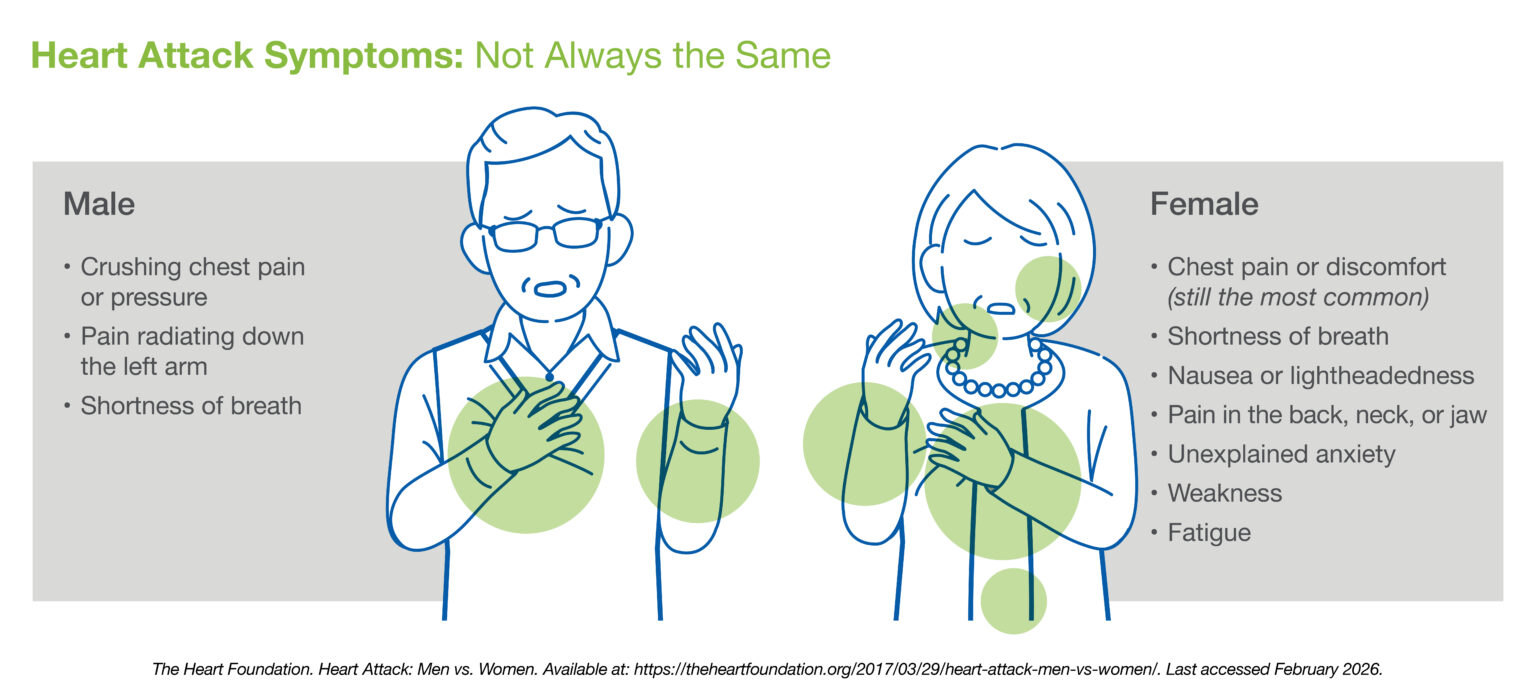
A critical part of this issue lies in the unrecognised and under-communicated symptoms. For instance, the warning signs of a heart attack are often misunderstood. While the most common symptom reported by 93% of both men and women is indeed chest pain or discomfort,5 a woman’s experience of a heart attack can be more varied. Women are more likely than men to experience other symptoms in addition to chest pressure, such as shortness of breath, pain that radiates to the back or jaw, and nausea with 33% of women experiencing nausea versus 19% of men.5,6 Furthermore, some women may only experience unexplained fatigue, dizziness, or sleep disturbances.7 Communicating and recognizing these diverse symptoms is vital for women seeking timely, life-saving medical care.
The Unique Heart Health Risks Women Face
There are also several gender-specific risk factors that have an impact on heart health that may either be unknown or are overlooked by health care professionals and the general public alike. Some of the risk factors are:
- Hormonal Influences:As women enter (pre-) menopause, estrogen levels drop, which increases susceptibility to heart issues by decreasing blood vessel flexibility.2 This in turn increases inflammation and fluctuating cholesterol levels.2
- Pregnancy can also have an impact, as conditions such as preeclampsia, gestational diabetes, and high blood pressure, can increase a woman’s long-term risk of heart disease.2
- Caregiving Roles: Women make up nearly two-thirds of informal caregivers in Europe.8 Being primary caregiver and managing both children and aging parents often exacerbates emotional and physical stress.9 Sandwiching this with simultaneous demands from work can leave little time for self-care, resulting in increased blood pressure and cortisol levels, poor sleep quality and emotional exhaustion.9
- Workplace Inequalities: Within the workplace itself, systemic issues such as disparities in pay, representation in leadership, and workplace bias add to the mental load women carry and heighten stress levels.10
While each of these factors poses a distinct risk, a common thread weaves through several of them: chronic stress. This pressure isn’t just a feeling of being overwhelmed, it’s a powerful biological process with direct consequences for the heart.
Stress is a significant contributor to heart health, disproportionately affecting women3
It has been long established that, stress triggers the release of cortisol and adrenaline, which when sustained over time, can lead to chronic high blood pressure, increased heart rate and arterial inflammation, and long-term damage to the cardiovascular system.4Many women also experience strong physiological responses to emotional and social stressors.11
A small but striking example of stress biology is stress‑induced cardiomyopathy (often called “Broken Heart Syndrome” medical term is takotsubo cardiomyopathy), where intense emotional or physical stress temporarily weakens the heart muscle and can mimic a heart attack.12 Awareness matters because symptoms, like chest discomfort or breathlessness, require urgent medical evaluation even if they later prove to be non‑ischemic.12 Nearly 90% of Broken Heart Syndrome cases occur in women, particularly those aged 50 and older.12,13 Read more on the deeper brain and heart connection here.
While “Broken Heart Syndrome” is a powerful example of how a single stressful event can impact the heart, the bigger issue for most women is the day-to-day stress that slowly builds up over time. And for many, a major source of that ongoing pressure comes from the workplace.
Stress factors at work
High demands at work – the “always on” mentality, tight deadlines, and inflexible hours can often create a stressful environment.10Add on the fact that women are more often tasked with the emotional support roles, such as mentoring and team morale management, burnout in women has become increasingly common with nearly half reporting frequent burnout compared to one-third of men.14 If we add on top the prevailing societal expectation for women to excel professionally while fulfilling traditional roles at home, these reports of burnout only increases. Balancing caregiving and career, many women often feel torn between being either an exemplary employee or caregiver.14
Do Women Experience Stress Differently Than Men?
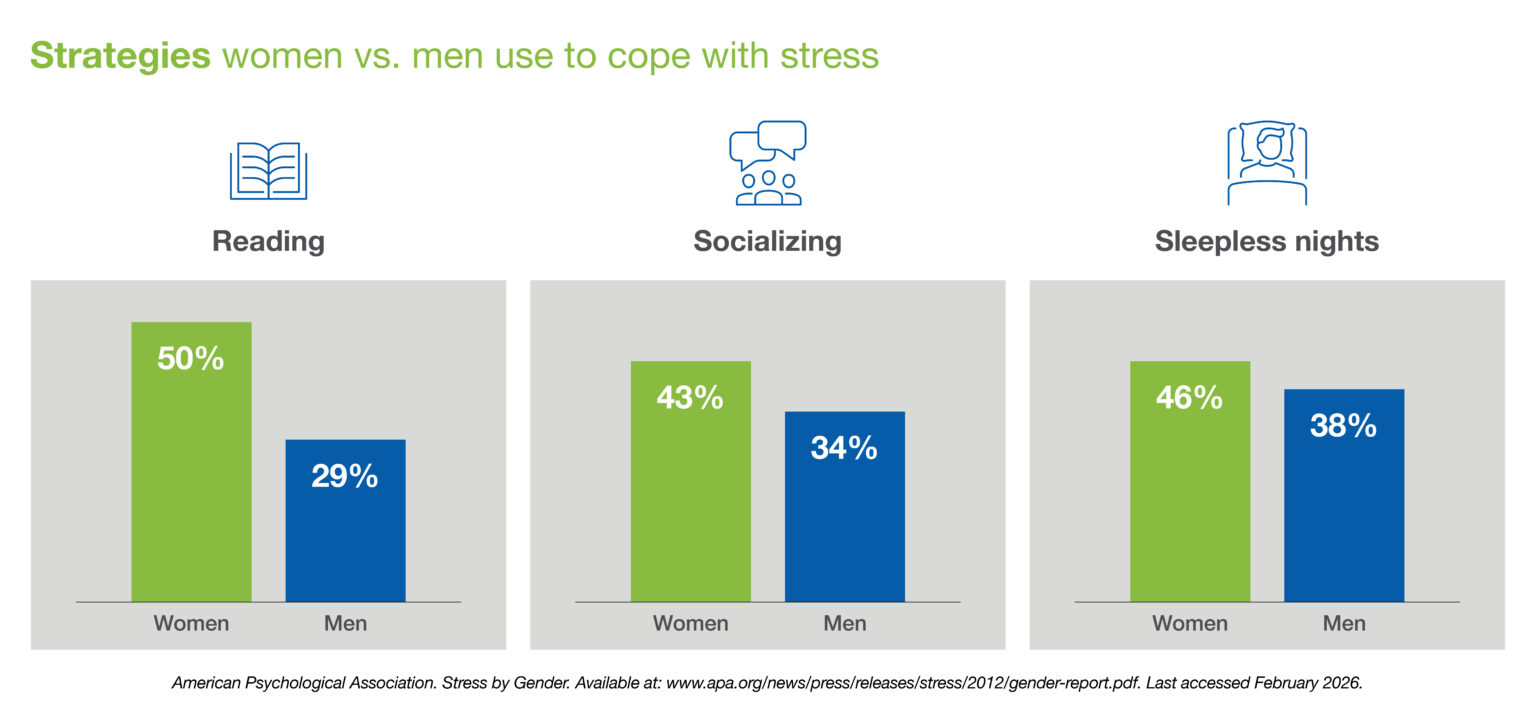
This multi-faceted stress load isn’t just felt more intensely; it’s often processed differently between men and women. Biologically and psychologically, men are more inclined toward a “fight-or-flight” reaction to acute stress.15 Women, conversely, have a greater tendency to internalize their stress, which can contribute to higher rates of anxiety.15 This is reflected in coping mechanisms; while both genders turn to exercise and music in nearly equal measure, women are significantly more likely to engage in social and sedentary activities.16 For example, 43% of women spend time with friends or family to manage stress compared to 34% of men, and 50% turn to reading compared to just 29% of men.16 While understanding these different tendencies is insightful, the good news is that many powerful stress-management techniques are universal.
Which Strategies Help Reduce Stress and Support Heart Health?
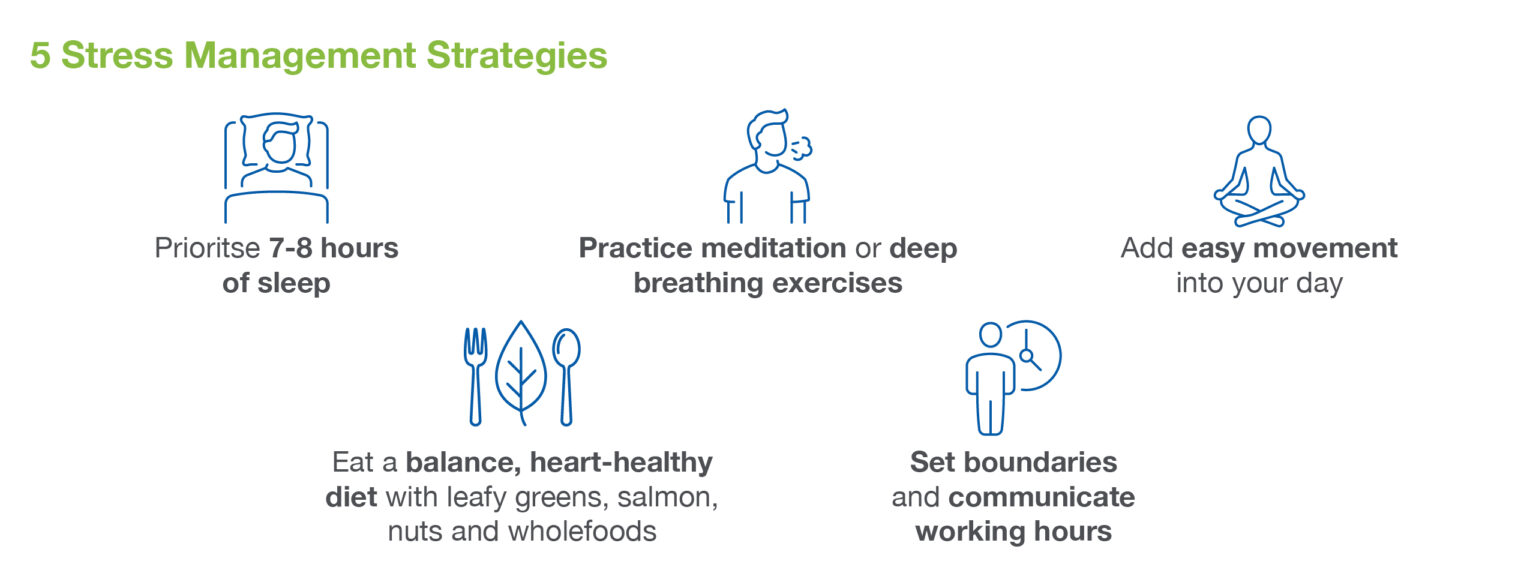
Some actionable strategies to help manage stress and support a healthy heart17:
- Sleep: Make sleep a priority, aiming for 7-8 hours of quality sleep each night to allow your heart and body to recover from daily stressors
- Eat: Eat a balanced, heart-healthy diet with foods like leafy greens, salmon, nuts, and whole grains into your meals. Read more about the power of a healthy diet on heart health here
- Exercise: Add easy movement into your day (e.g. take the stairs, do desk stretches, have walking meetings) or schedule time to exercise into your calendar like you would a meeting. A fun workout class or an early morning swim can make all the difference
- Mindfulness: Practice mindfulness through meditation, deep breathing exercises, or journaling to lower cortisol levels
- Priorities: Set boundaries and say “no” to tasks or obligations that overwhelm you, e.g.: Establish clear working hours that are clearly communicated to colleagues
Empowering women to protect their heart health
Stress is part of modern life but understanding how it affects the body gives women the clarity to act early and confidently. Awareness is not about alarm; it is about ownership – knowing how symptoms can be present, why recovery habits matter, and when to seek support. Empowerment also means recognising that self‑care is not indulgent; it is a biological necessity that keeps the cardiovascular system adaptable and resilient.
Protecting women’s heart health is bigger than any single habit. It is the cumulative effect of small, repeatable choices – moments of calm between meetings, a short walk instead of another email, a boundary that preserves sleep, a decision to speak up about a symptom. Each step strengthens the heart’s capacity to cope, to recover, and to carry you through the roles that matter most.
Want to read more about the impact of stress on your heart health?
Read more about it here