Cardio-Oncology: Protecting Your Heart Through the Cancer Journey
Cardio-oncology is one of the fastest-growing areas of modern medicine, and with good reason. Cardiovascular disease (CVD) is now the leading non-cancer cause of mortality among people who have survived cancer, with long-term survivors at significantly increased risk of heart-related complications compared to those who have never had cancer.1 If you or someone close to you is facing a cancer diagnosis, understanding the role your heart plays is one of the most important steps you can take.
Why the Heart Matters in Cardio-Oncology and Cancer Care
Being diagnosed with cancer is life-changing and comes with overwhelming emotional challenges. What many patients don’t realize is that cancer can also affect heart health.
This is where cardio-oncology plays an important role – a specialized field focused on the connection between cancer and the heart.2 Its goal is simple: to ensure that life-saving cancer treatment does not cause long-term damage to the patient’s heart: Cardio-oncology brings cardiologists and oncologists together to protect heart health while fighting cancer.2
While advances in cancer therapies have improved survival rates, they may also place increased stress on the cardiovascular system.2 Cardio-oncology integrates heart protection into the care plan, helping make cancer treatment more sustainable.2
Starting Point: The Shared Foundation of Cancer and Heart Health
One of the most significant findings in recent cardio-oncology research is that cancer and heart disease are not as separate as we once assumed. Both conditions share a number of underlying risk factors, including chronic inflammation, certain genetic variants, obesity, type 2 diabetes, and lifestyle factors such as smoking and physical inactivity.3 Inflammation plays a particularly dual role: it can drive tumor growth and simultaneously damage blood vessel walls, contributing to atherosclerosis, a build-up of fatty deposits inside the artery walls, and raising the risk of cardiac events.3
A question patients often ask is: Can cancer cause a heart attack? Cancer itself does not directly cause a heart attack in the same way as blocked arteries. However, the disease, and some of the therapies used to treat it, can significantly raise cardiovascular risk. Blood clots (arterial thromboembolism), systemic inflammation, and vascular changes linked to certain treatments all increase the likelihood of cardiac complications in vulnerable patients.4 Knowing this link exists is the first step in managing it.
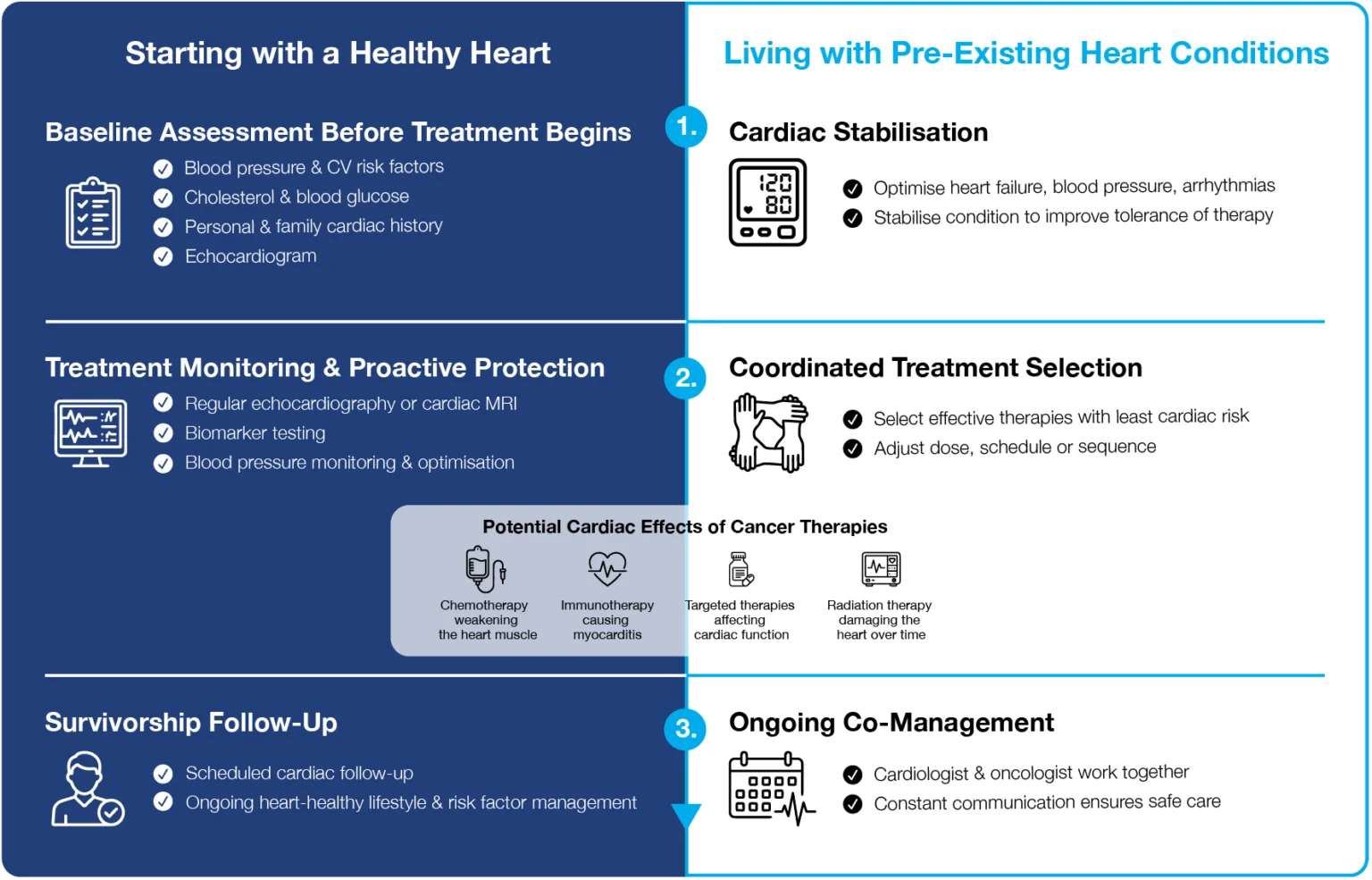
Because of these shared foundations, evaluating heart health at the very start of the cancer journey is the most critical first step in cardio-oncology. A comprehensive baseline assessment typically includes:
- measuring blood pressure and reviewing cardiovascular risk factors2
- assessing cholesterol and blood glucose levels2
- reviewing personal and family cardiac history2
- performing an echocardiogram, an ultrasound scan of the heart, where appropriate, to establish a clear picture of heart function before treatment begins2
This baseline becomes the reference point for every decision that follows.
Cardio-Oncology in Action: Protecting the Healthy Heart during Treatment
For patients who undergo a cancer treatment journey with a healthy heart, the focus is firmly on prevention. The aim is to monitor and protect the heart muscle and blood vessels throughout therapy, ensuring that no cardiac complications interrupt the oncology plan.5
One treatment option for cancer can be chemotherapy, which can damage the DNA of cancer cells.6 However, this therapy can weaken the heart muscle over time.6
Immunotherapy, a cancer treatment that activates the body’s own immune system to target cancer cells, has emerged as a key pillar of cancer management and brings its own considerations. Immune checkpoint inhibitors (ICIs) can, in rare cases, trigger myocarditis, an inflammation of the heart muscle.7
Targeted cancer therapies can also affect cardiac function, but this effect is usually reversible if detected early.8 In addition, radiation therapy to the chest area can gradually damage the heart.9
Understanding these potential effects is not a reason to delay treatment. It is a reason to monitor proactively.
In line with this approach, cardio-oncology research has identified a range of strategies to protect the heart during cancer treatment. These include:
- regular echocardiography, repeated ultrasound scans of the heart, or cardiac MRI (detailed imaging scans of the heart using magnetic resonance) to track changes in heart function10;
- biomarker testing (troponin and BNP levels) to detect early signs of cardiac stress10;
- blood pressure monitoring and optimisation throughout therapy2.
Managing Cancer and Heart Health Together: Care for Pre-Existing Conditions
The picture becomes more complex for patients who arrive at their cancer diagnosis already living with a heart condition, whether that is heart failure, atrial fibrillation (AF), an irregular heart rhythm caused by disordered electrical signals, coronary artery disease, a condition in which the arteries supplying the heart with blood become narrowed or blocked, or high blood pressure. These patients require a particularly careful and coordinated approach, as the relationship between cancer and the heart demands constant attention.
When a patient’s heart is already under strain, oncologists and cardiologists select therapies that are as effective as possible while minimising additional cardiovascular burden.
This may involve choosing alternative, less cardiotoxic, chemotherapy agents, adjusting dosing schedules or sequencing treatments to allow the heart time to recover between cycles.11
In addition to adapting cancer therapies, existing heart conditions may need to be stabilised before certain treatments can begin. Well-controlled blood pressure and optimised heart failure management, for example, can significantly improve a patient’s ability to tolerate chemotherapy or surgery.12
To support this integrated approach, dedicated cardio-oncology clinics bring cardiologists and oncologists together to manage patient’s cancer and heart health. This constant communication is vital for patients with pre-existing conditions.2
If you are in this situation, do not hesitate to ask your care team how your cardiac and oncology specialists communicate and how you can be part of that conversation.
Along the Way: Recognising Symptoms and Practising Self-Care During the Cancer Journey
Cancer and heart health management does not happen only in the clinic. Patients also play a crucial role by understanding what symptoms to watch for.
During cancer treatment, the following symptoms may signal that your heart is under stress and require prompt assessment by your care team:
- new or worsening breathlessness, especially at rest or during the night
- chest tightness, pain or pressure13
- sudden, unexplained fatigue or a significant drop in your usual energy levels13
- palpitations or a noticeably irregular heartbeat13
- swelling in the legs, ankles or feet13
None of these symptoms should be dismissed as ‘just’ a side effect of cancer treatment without proper assessment. Reporting them early gives your team the chance to act swiftly and keep your plan on track.
Lifestyle choices remain powerful medicine, even during cancer treatment. Where possible and guided by your care team:
- Movement: Regular, moderate exercise, such as walking or gentle cycling, helps maintain heart muscle strength, reduces fatigue, and supports mental well-being.14
- Nutrition: A heart-healthy diet rich in vegetables, wholegrains, lean protein, and unsaturated fats supports the body’s resilience during treatment and beyond.15
- Mental health: Anxiety and depression are common among people navigating a cancer diagnosis, and both can place additional strain on the cardiovascular system.16
Always speak with your oncology team before starting or changing any exercise or dietary routine during treatment.
The Destination: Healthy Survivorship in Cardio-Oncology
As cancer survival rates continue to rise, the question of long-term quality of life becomes increasingly central. For cardio-oncology, the work does not end when treatment does.
Some of the cardiac effects of cancer therapy, particularly those associated with radiation, can take years or even decades to become clinically apparent.17 Scheduled cardiac follow-up after treatment ends allows clinicians to detect and manage any late effects early, before they significantly affect quality of life or long-term health.11
Above all, cardio-oncology is about empowerment. Patients who understand the risks and actively engage with their care team are better equipped for both the treatment journey and the life that follows.
At Daiichi Sankyo, we care for every heartbeat. We understand the importance both of preventing CVD and addressing risk factors for it; we also know that lifestyle choices can have a huge impact on the risk of experiencing CV events. That’s why we are dedicated to raising awareness of CVD and, ultimately, to helping reduce the impact of CVD in Europe.