Diving into the Public Perceptions on Cardiovascular Care in our European Heart Health Survey
Public health actions and increased awareness can help prevent and manage risk factors for cardiovascular disease (CVD), the leading cause of death in Europe.1 In 2025, we developed the “European Heart Health Survey – Public Perceptions on Cardiovascular Care”.
The survey was conducted online between 25th March 2025 and 14th April 2025 in Austria, Belgium, Germany, Italy, Portugal, Spain (general public only). There were over 8,500 respondents including 3,674 patients with a range of pre-existing conditions such as CVD, blood disorders and diabetes, as well as 4,906 members of the general public.2
From the survey, valuable insights were derived to understand public and patient perceptions on heart health and inform activities to enhance Daiichi Sankyo’s positioning as a trusted partner in supporting people to live healthier lives and prevent CVD.
Heart Health: a challenging topic
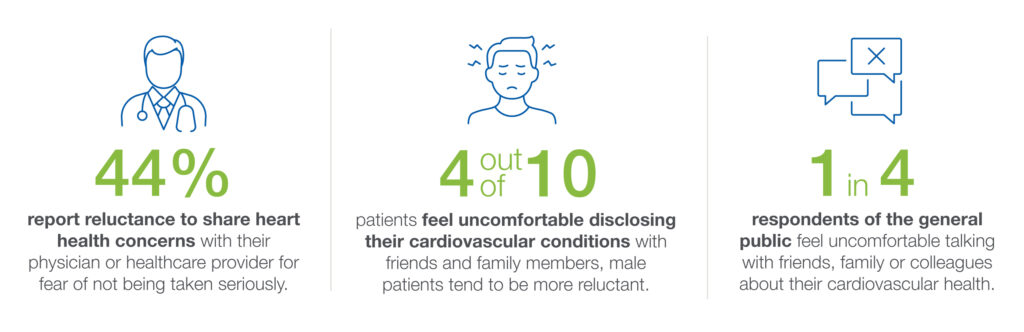
Tapping into the public voices across Europe, the survey revealed how people think and feel about heart health. Our first blog article has already explored some of these findings, and the second blog—now available—dives deeper into the key themes. One big theme became inherently apparent from the survey – there is a lack of consistent and trusted communication routes for patients.2 The survey also showed a reluctance to discuss concerns with physicians, with nearly half of patients (44%) reporting hesitation in sharing heart health concerns with their healthcare providers, citing fears of not being taken seriously.2 This suggests a trust and communication gap that may delay timely interventions.
In addition, 4 in 10 patients said they feel uncomfortable disclosing cardiovascular conditions to friends or family, showing a discomfort in personal conversations. Male patients, in particular, reported higher levels of reluctance. Besides, 1 in 4 respondents from the general public also expressed discomfort in discussing cardiovascular health with friends, family, or colleagues, reflecting a persistence of general public stigma around heart health conversations.2
The absence of open dialogue could have a tangible impact, resulting in limited public familiarity with heart health symptoms.2 1 in 5 patients admitted to limited knowledge of cardiovascular symptoms. While chest pain and shortness of breath are well recognised, many remain unaware of other warning signs such as fatigue, dizziness, nausea, or jaw pain.2 This gap highlights the need for broader education efforts.
Image to include the following stats to support the statements above similar to the factsheet.
- Nearly half of patients (44%) report reluctance to share heart health concerns with their physician or healthcare provider for fear of not being taken seriously.
- 4 out of 10 patients feel uncomfortable disclosing their cardiovascular conditions with friends and family members, male patients tend to be more reluctant.
- 1 in 4 respondents of the general public feel uncomfortable talking with friends, family or colleagues about their cardiovascular health.
Example:
Heart health misinformation in the digital age
A further challenge identified in the survey is the role of misinformation and the sources patients turn to for advice and guidance. Many patients reported relying heavily on online sources and social media for information on heart health, with mixed reliability.2 A European Parliament study noted that the share of people using the internet for health information has grown rapidly. For those aged 25-34, this increased from 56% in 2015 to 65% in 2023, and among people aged 65-74 it nearly doubled, from 25% to 42% over the same period.3
While online health platforms can raise awareness, they also risk amplifying myths and misconceptions about cardiovascular symptoms and treatment. Friends and family were frequently cited as sources of advice, yet discussions in personal circles may also spread incomplete or inaccurate information. Their reluctance to engage with doctors, seen in the 44% of patients hesitant to raise concerns, creates a gap where misinformation can thrive.2
For the general public, media coverage and online search engines often play a bigger role than structured health education campaigns,4 which highlights the need for clearer, evidence-based communication, especially as misinformation has the potential to negatively impact public health outcomes.
This misinformation can significantly impact patients’ understanding of their health conditions, leading to delayed treatment, poor adherence to medical advice and the adoption of ineffective or harmful practices.4 This underlines the importance of strengthening health literacy programs, promoting responsible digital health communication, and ensuring patients feel empowered to validate online information with their physicians.

Why these insights matter to improve heart health
These findings underscore a clear need for public health initiatives and community-based awareness campaigns that:
- Improve education about the diversity of cardiovascular symptoms
- Foster open conversations between patients, families, and healthcare providers
- Reduce the stigma and discomfort associated with discussing cardiovascular health
- Address misinformation by promoting trustworthy sources of information
- Empower patients to take proactive steps in prevention, screening, and management of heart disease
By addressing these barriers, stakeholders across the healthcare ecosystem can support earlier diagnosis, more effective prevention strategies, and stronger patient-physician partnerships.
One way we are doing so is through our digital innovation hub, DSPACE, where we leverage digital technologies to make a difference in both patients and HCPs lives.5 We want to create “value beyond the pill” in an endeavour centred on patients’ needs that empower them to become more involved in treatment decisions, adhere to their regimen or better manage their condition. We also support HCPs in making the best decisions with their patients through digital services that help doctors keep their knowledge up to date, increase their awareness of treatment options or providing point-of-care diagnostics to identify patients in need of earlier treatment.
Moving forward: our commitment to improving knowledge of heart health
As part of our mission to help people live healthier lives, Daiichi Sankyo remains committed to:
- Supporting awareness initiatives that close the knowledge gap on cardiovascular disease symptoms
- Encouraging dialogue and trust between patients and healthcare professionals
- Partnering with stakeholders to build a future where heart health conversations are normalized and accessible
The European Heart Health Survey is not just a snapshot of perceptions, it is a call to action to transform how cardiovascular care is understood, discussed, and delivered across Europe.
At Daiichi Sankyo, we are dedicated to fostering awareness about cardiovascular health and combating misinformation by working hand-in-hand with healthcare providers and patient organisations. We believe that true care extends far beyond medications – it’s about embracing a comprehensive approach to heart health. As advancements in technology continue to transform the healthcare landscape, we are committed to exploring cutting-edge digital solutions that enhance and expand cardiovascular care, empowering healthcare professionals to better meet the needs of their patients.
Would you like to know more about our findings? Download the factsheet here.